35th Philadelphia Film Festival: Animated Shorts Program
I’m always grateful for an opportunity to see artful indie animated shorts on a big screen within biking distance from my home, and in recent years the Philadelphia Film Festival’s program has been reliably good. This year’s, though it included some strong entries, was unfortunately sorely lacking in thematic variety: Six of the eight films were about parenting or marriage. I won’t say they didn’t honor those experiences, but few felt especially insightful. Unlike their mainstream counterparts, most of these films made good use of the medium’s expressive elasticity, but it was definitely a less adventurous crop than usual.
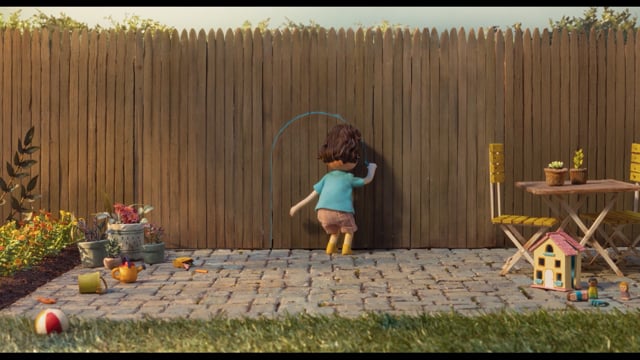
Cartoon Physics
A mom tries to preserve her child’s innocence, likening it to the forgiving physics of a cartoon world, knowing the harshness of the real world is lurking around every corner. I’m a big fan of some of Kuwahata’s and Porter’s previous stop-motion work, especially Negative Space, and this one is tonally similar and undeniably well-executed, but the writing is sadly unremarkable.
Marble & Lemons
A snapshot of aging mother and 20-something daughter on vacation together, an alternately prickly and tender relationship as one asserts her autonomy and the other begins to lose it. Not a standout, but elegantly constructed, with a nice palette and angular design.
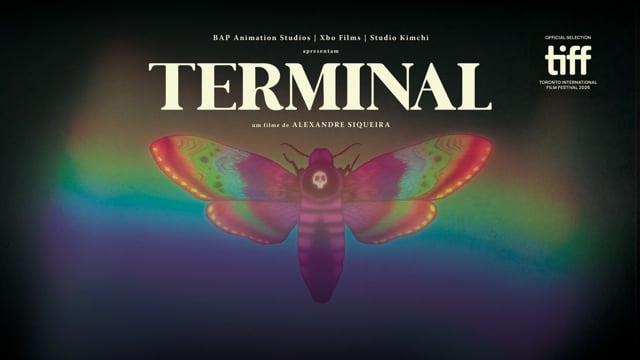
Terminal
A mother has to learn to let go a second time when her estranged son returns to the nest with a terminal illness. The son’s initial emergence from a pirate ship, covered in tattoos mapping his world travels, hints at a character depth we are ultimately not privy to. He and his mom are flat as a pancake.
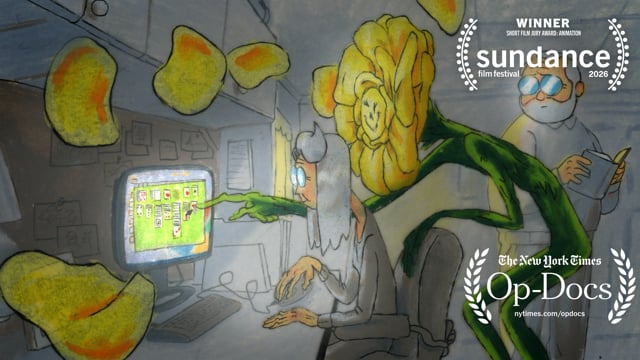
Ivar
A wicked and ultimately sweet homage to the loathing that coexists with love in a long-term relationship. Its insomniac heroine’s detailed catalog of her husband’s faults appropriately employs a variety of techniques, from live-action puppetry to hand-drawn frame animation.

Busy Bodies
This, the only non-narrative pick of the bunch, really stuck out, and I was surprised to see that its collection of bizarre Rube Goldbergs powered by automaton gnomes was made by an American, as it’s dripping with eastern European flavor. I like how proudly it flies its own flag, especially when its textured visuals start to disintegrate, but I ultimately wanted a little more from it than it had to offer.

Because Today Is Saturday
Easily the best of the program’s reflections on parenthood, depicting a mom trying in stolen moments to reconnect with her essential self, only to have her brief reprieve shattered by one or another domestic banality only she can solve. It moves through its mise en scène with a fluidity live action could never match, and while most stories tackling this topic tend to suggest that motherhood’s rewards are worth the endless and thankless aggravation, I appreciate that this one is caked in despair.

The End
I’m never not excited to see new work from this director (executive-produced by Noomi Rapace, no less!), and The End’s apocalyptic trip into air-travel hell with a zoologically diverse cast of characters is a refreshing left turn from the overrepresented family drama of the rest of the screening. Lindroth von Bahr’s signature stew of humor and existential dread is a deadpan delight as always, even if it’s doing a lot more winking at the audience this time. This film’s structure of loosely-connected vignettes makes it feel like a spiritual sequel to her 2017 musical, The Burden.

Living With a Visionary
It brings me no joy to report that this heartbreaking true story of a man caring for his wife with Parkinson’s disease is an assembly-line tearjerker whose visuals do little to elevate the linear literalism of its narration. I’ll be shocked if it doesn’t get the Oscar it is so transparently designed to receive.
Four posts in this series

31st Philadelphia Film Festival: Animated Shorts Program
After having to cancel my plans to attend last month’s Ottawa International Animation Festival at the last minute, I was glad the Philadelphia Film Festival’s animated shorts program gave me a chance to get my fix. This was a pretty solid collection of films, encompassing a variety of styles and narratives. The overall tone was fairly dark, which is always fine with me, but several of the films also made a habit of just stopping… See more →

33rd Philadelphia Film Festival: Animated Shorts Program
The Scariest Skeleton
Tennis, Oranges
Martyr’s Guidebook
It Shouldn’t Rain Tomorrow
Horse Portrait
Beautiful Men
A Crab in the Pool
Bug Diner
Wander to Wonder
See more →
34th Philadelphia Film Festival: Animated Shorts Program
I was once again unable to make it to the animation festival in Ottawa this year, and the Philadelphia Film Festival once again filled some of that gap with a well-curated program of shorts. I’m feeling pretty raw lately about a variety of big things both personal and global, and several of these films collectively poked at all those things, so while I don’t regret attending, I did come away from the screening more emotionally… See more →
35th Philadelphia Film Festival: Animated Shorts Program
I’m always grateful for an opportunity to see artful indie animated shorts on a big screen within biking distance from my home, and in recent years the Philadelphia Film Festival’s program has been reliably good. This year’s, though it included some strong entries, was unfortunately sorely lacking in thematic variety: Six of the eight films were about parenting or marriage. I won’t say they didn’t honor those experiences, but few felt especially insightful. Unlike their… See more →